Notice

I am working on the template of this blog today in order to chase down some problems that have developed with my template and widgets.

Macon County Commissioners

Coverage of the meetings of the Macon County Board of County Commissioners.

Franklin Town Board of Aldermen

Coverage of the meetings of the Franklin Town Board of Aldermen.

Macon County School Board

Coverage of the meetings of the Macon County School Board.

Photoblog

Photos from my photoblog.

nullspace for future use

nullspace for future use

About

Showing posts with label NCGA Project. Show all posts

Wednesday, February 12, 2025

From EdNC: Meet Sen. Kevin Corbin: Why the ‘voice of the far west’ believes in public schools

Meet Sen. Kevin Corbin: Why the ‘voice of the far west’ believes in public schools

Sadie Ann, Sen. Kevin Corbin's granddaughter, held the Bible during his swearing in at the Macon County Courthouse for his third term in the North Carolina Senate.

Corbin, R-Macon, represents District 50, which includes Cherokee, Clay, Graham, Haywood, Macon, Jackson, Swain, and Transylvania.

He is respected across party lines for his leadership on Medicaid expansion, receiving an award from NC Child.

In the 2025-26 session of the N.C. General Assembly, Corbin will serve as co-chair in the Senate of both the Appropriations Committee on Education/Higher Education and the Committee on Education/Higher Education.

Macon County is home

When we meet people as we travel across North Carolina, we ask “Who are you?” over and over again as a way to get to know the person better. As we researched this article, we came up with our own “Who are you?” for Corbin.

Corbin is from Macon County. He loves western North Carolina. He attended public schools. He is a first-generation college graduate. He is a Mountaineer. He was first elected to the Macon County Board of Education at 22. He was inducted into Blue Cross Blue Shield of NC Hall of Fame in 2013, the highest honor for brokers and agents. He is a gospel singer. He is "Pop" to his grandchildren. He is a Republican. He is a life-long public servant. He was a leader on Medicaid expansion. He is committed to change across party lines.

He is a North Carolina senator.

Corbin was born and raised in Macon County and still calls it home. When he talks about the region he serves, he uses the word "beloved."

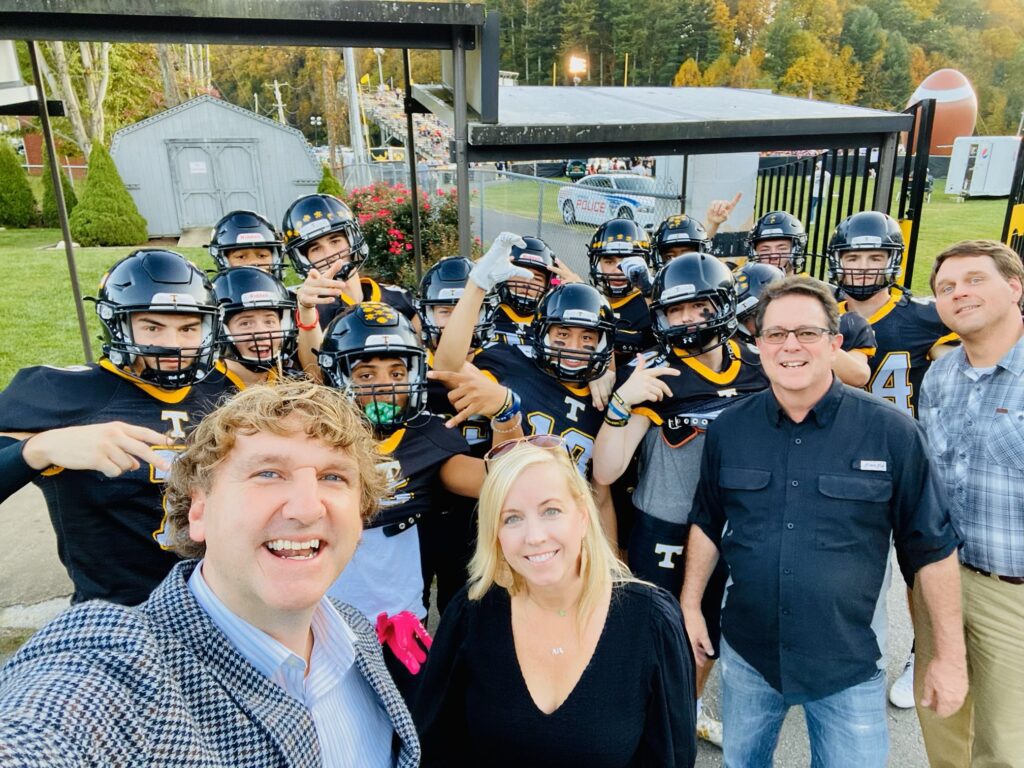
Corbin attended public schools in Macon County, graduating from Franklin High School in the class of 1979.

He went on to Appalachian State University (App), where he graduated in 1983 with honors and a degree in business administration. While at App, he served as news editor of the university's paper.

Corbin founded and owns The Corbin Insurance Agency, Inc., and the Blue Ridge Insurance Group, which provide home, auto, health, business insurance, and more in western North Carolina and upstate South Carolina.

At 22, Corbin was elected to the Macon County School Board. He served on the board for 20 years, serving as chair for 16 of those. He led a 25-year, long-range plan to build new schools countywide costing $300 million, which will conclude with a new building for the high school.
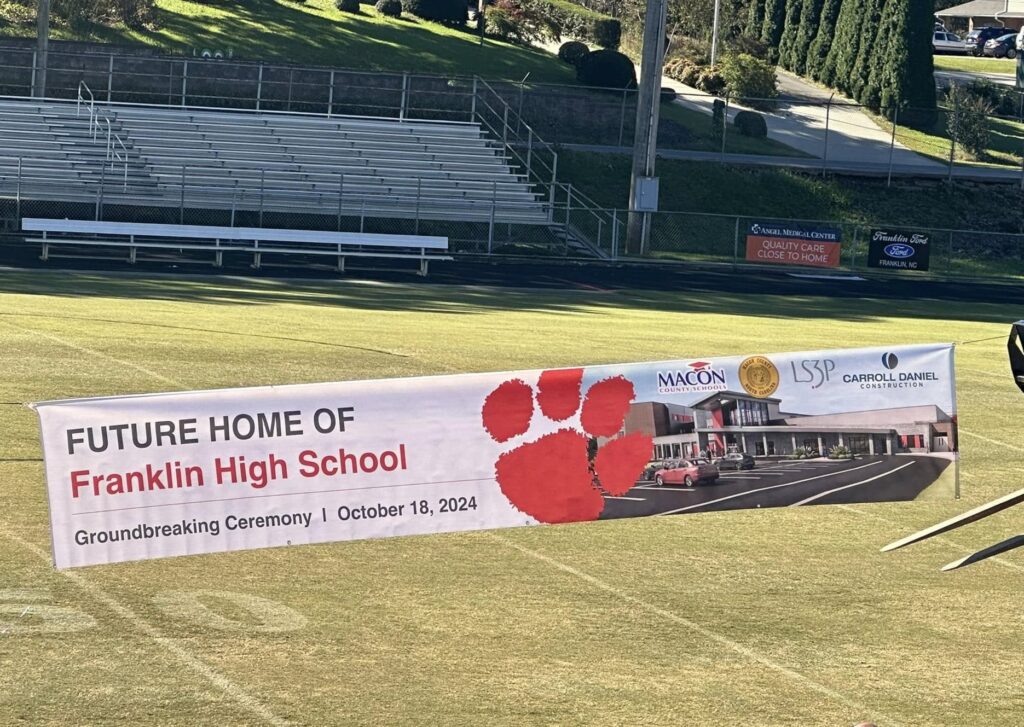
Courtesy of Kevin Corbin

He says his commitment to improving local education set the foundation for his "enduring dedication to public service."

Corbin served two terms on the Macon County Commission before being elected to the N.C. House of Representatives. He served two terms in the House in 2017-18 and 2019-20 before being elected to the N.C. Senate.

On his campaign website, his issues include broadband expansion, free enterprise, taxes, jobs, regulations, individual liberty, sanctity of life, efficient state government including the rainy day fund, voting as a fundamental right, and education.

Corbin is married to his wife, Beth, formerly a social worker. They celebrated their 40th wedding anniversary in 2024 and have two children, Matt and Maggie. To their grandchildren, they are "Pop" and "Mimi."

Matt served as a captain in the U.S. Air Force before returning home to open Corbin Dental Care. You can see the whole family's commitment to public service on his son's website, which says, "His passion for the local community and desire to serve others is what drove Dr. Corbin to the field of dentistry.... Dr. Corbin is so honored to be back and serve Macon County, North Carolina, this great place we call home."

Maggie graduated from Southwestern Community College -- where her dad has served on the board of directors of the college's foundation -- and she is also in a helping profession, serving as a certified occupational therapist. Maggie is a cancer survivor and thanks her faith, family, friends, and community, she says. Throughout 2022, people -- including the girls she coaches in cheer -- had signs and t-shirts that said, "Her fight is our fight. #MaggieStrong."

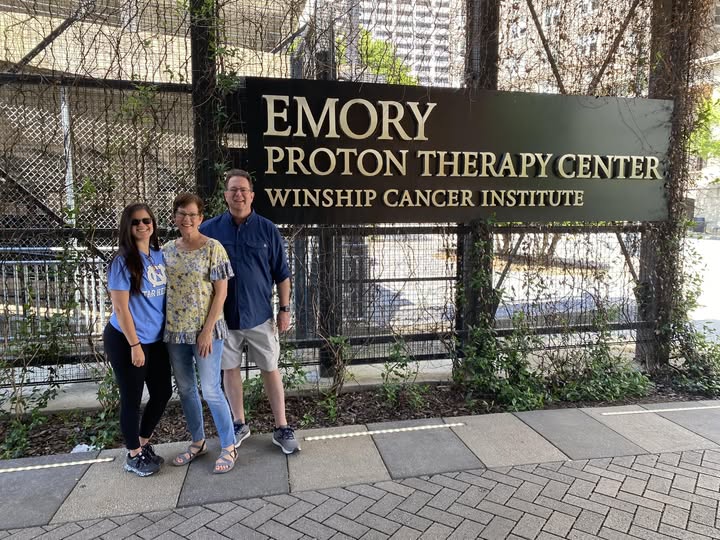
The Corbins are members of Holly Springs Baptist Church, where he serves as a deacon. Corbin sings gospel and is a founding member of Blue Ridge.

In a Facebook post in 2024, Maggie said to her dad, "We are so thankful for you and all the hard work, love, and support you give to your family, friends, and community."

Corbin's leadership on Medicaid expansion

Corbin's campaign website says, "His efforts were instrumental in the expansion of Medicaid in North Carolina, extending coverage to 600,000 residents for the first time -- an accomplishment that highlights his ability to effect substantial change across party lines."

Corbin says, "I was one of the first Republicans in the building to favor Medicaid expansion."

According to The Mountaineer, when Corbin had the opportunity to move from the House to the Senate, he negotiated with leadership to not lose seniority, and he secured a promise to "discuss" Medicaid expansion.

He is proud that it passed the Senate with just two "no" votes, saying in an article in the Smoky Mountain News, “Two years ago, most people would have found it impossible to believe that the North Carolina Senate would even hear Medicaid expansion, much less pass it by an overwhelming bipartisan majority.”

Democratic Leader Sen. Sydney Batch, D-Wake, has noted the "heat" Corbin took in the Republican caucus on the way to getting buy in across party lines.

As a health insurance agent, Corbin was able to share stories with legislators of single mothers who couldn't afford health insurance because their income was too high to qualify for Medicaid but too low to afford private insurance.

Corbin knew too many of his constituents fell in that coverage gap. Swain and Transylvania -- both counties in his district -- were in the top 10 counties with the largest share of non-elderly adults who became eligible for Medicaid, according to this study by the N.C. Justice Center.

As Corbin was fighting for Medicaid expansion, his daughter Maggie was fighting against cancer.

Access to health care, he knew, matters.

Why Corbin is pro public school
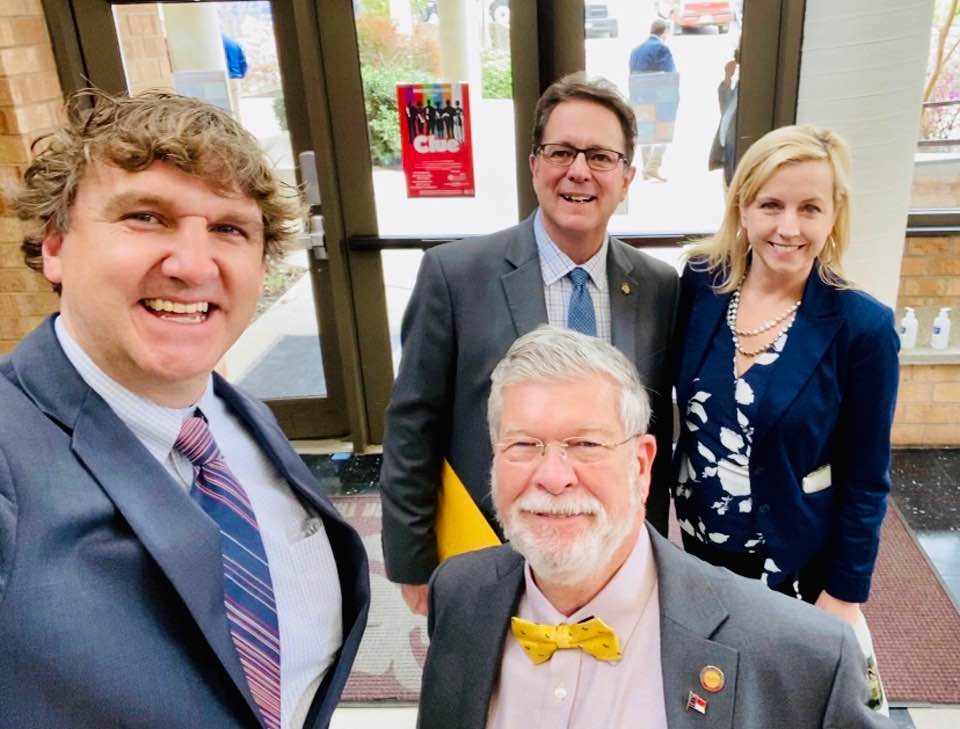
Corbin with Freebird McKinney (left) and Julie Pittman visiting schools in Western North Carolina. Courtesy of Freebird McKinney

At a recent convening by the Public School Forum of North Carolina, Corbin kicked off his remarks with, "First out of the gate, let me tell you, I am very pro public school."

He said his grandfather was a farmer, and his father went to high school through 10th grade when he joined the military. Corbin is proud both of his kids went to college.

"My family has gone through that evolution of education," he says. "So I've seen how important it is for the outcomes of your life."

"I went to public school. My wife went to public school. My kids went to public school.
I really believe in public schools."

-- Sen. Kevin Corbin, R-Macon

Corbin said he thinks we all want better educated children so we need to talk about what outcomes matter.

He supports changing the funding model for public schools, and he thinks that shift could lead to more money for small school districts and rural schools.

"Teachers in NC deserve to have their pay adjusted to competitive levels," he says. "We don’t need to blame the Democrats or Republicans, it just needs to be fixed."

https://www.facebook.com/kevin.corbin/posts/pfbid02uZnE9DYvxciShEmU9BUW8T78FaQQ99a1kvkDTNrP7wGhfQm58E3fzTKD5UcM5Ckpl

Corbin also says, "It is our responsibility as state leaders to provide our teachers with the tools necessary for them to perform in the classroom," noting that "teachers should not have to spend their personal funds for classroom materials." He says, "I believe NC can put more money into the classroom."

He supports advanced teaching roles, master's pay, and state supplements for rural counties that can't afford local supplements.

He supports the N.C. Center for the Advancement of Teaching (NCCAT).

https://www.facebook.com/kevin.corbin/posts/pfbid029dudsjwnFy7PWtdNB7wpgRwLaXJPZrRJRyqyqwnV73QviiBp5upeEoYh4z9ZCr5Pl

"If schools are getting public money, then they should be held accountable," says Corbin, when asked about funding for Opportunity Scholarships, which are taxpayer funded vouchers for eligible private schools. "I think everybody should be held accountable in the same way."

He supports a parent's right to choose a nonpublic school for their child, but he says, "Beginning my career in public service on the Macon County Board of Education, I am a strong advocate for public education."

Julie Pittman, the western regional teacher of the year in 2018 and later special advisor to the state superintendent during Catherine Truitt's tenure, says Corbin is "the voice of the far west."

"People out here like him," she says, "because he shows up."

Corbin's "beloved" western North Carolina

Even before Hurricane Helene, Corbin was "committed to ensuring that Western North Carolina’s voice is heard loud and clear in the General Assembly." He showed up during COVID. He showed up when Pactiv Evergreen closed a papermill in Canton, the state's largest layoff of that year.
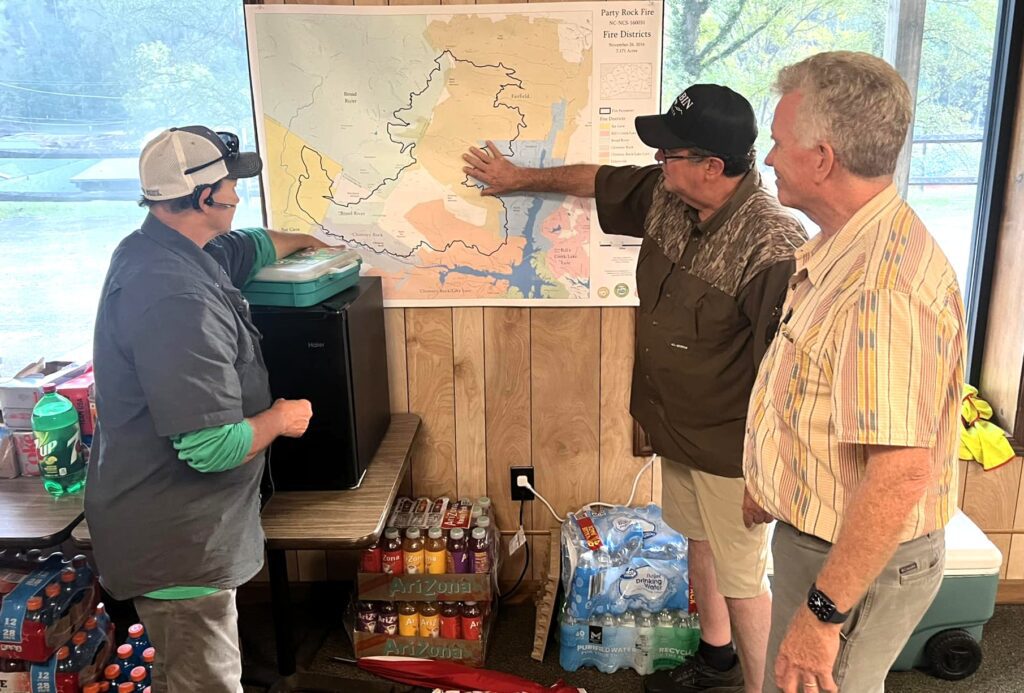
Corbin helping with relief in Chimney Rock after Helene. Courtesy of Kevin Corbin

After Helene, he made national headlines when he denounced the “conspiracy theory junk” that was circulating.

"PLEASE help stop this junk," Corbin posted. "It is just a distraction to people trying to do their job. Folks, this is a catastrophic event of which this country has never known."

At the statewide level, Corbin is serving on Democratic Gov. Josh Stein's Rebuilding Western North Carolina Advisory Committee.
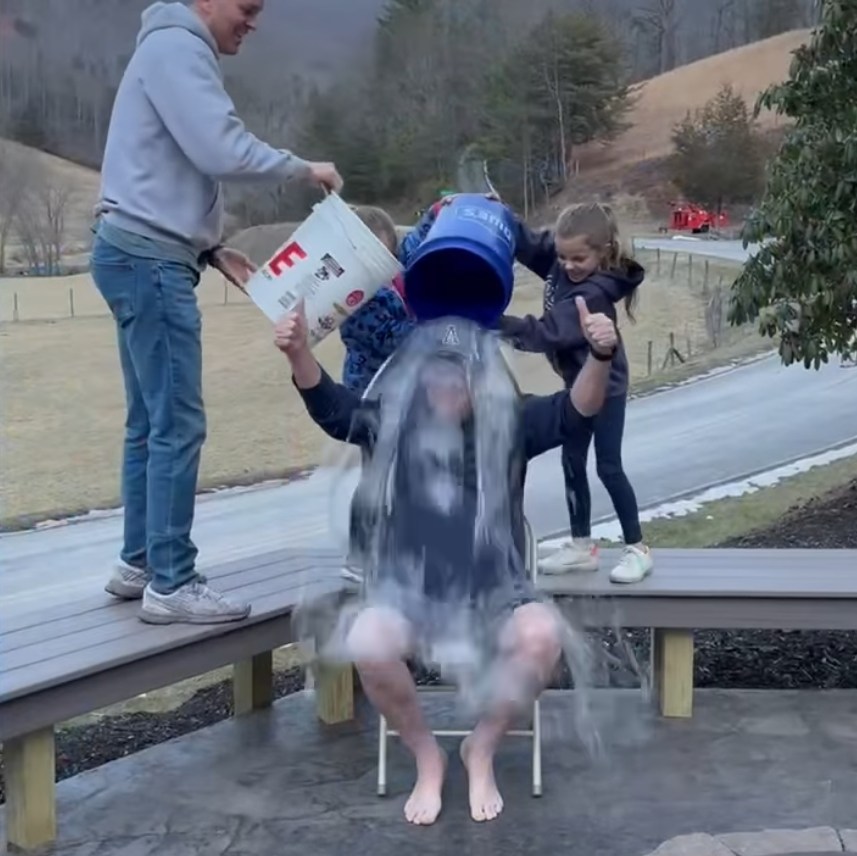
Corbin being plunged by his granddaughters. Courtesy of Kevin Corbin

At the local level, Corbin took the "Plunge for a Purpose" in January to raise money for a local family whose house was submerged by flood waters during Helene.

As Pittman says, Corbin shows up.

This article first appeared on EducationNC and is republished here under a Creative Commons license.

Wednesday, January 29, 2025

Representative Gillespie Appointed to House Committees


Representative Gillespie Appointed to House Committees 
 PRESS RELEASE (01-29-2025)

Raleigh, NC – On Wednesday, January 29, 2025, Speaker Destin Hall of the North Carolina House of Representatives announced House standing committee assignments for the legislative 2025-2026 biennium.

 Representative Karl E. Gillespie was appointed to serve on the following committees:

• Agriculture and Environment (Co-Chair)
• Appropriations, Agriculture and Natural and Economic Resources (Co-Chair)
• Appropriations (Vice-Chair)
• Emergency Management and Disaster Recovery
• Federal Relations and American Indian Affairs
• Health
• Rules
• Wildlife Resources

“It is a great privilege to have the opportunity to serve on these critically important House Committees,” stated Rep. Gillespie. “Working with my colleagues to advance policies that benefit our great state is an honor and I would like to thank Speaker Hall for his trust in me. The General Assembly has a substantial workload ahead and I am committed to ensuring that western North Carolina’s needs are prioritized and addressed.”

Tuesday, July 9, 2024

State Passes Law to Restrict Truck Length in the Cullasaja Gorge

Additional Information has been added after the press release that includes a copy of the passed bill and the North Carolina General Statute regarding traffic on US-64 through the Cullasaja Gorge in Macon County. Penalties will go into effect on December 01, 2024.


PRESS RELEASE (07-09-2024)
REPRESENTATIVE KARL GILLESPIE


Raleigh, NC – On Monday, July 8, 2024, House Bill 593 officially became state law after receiving the Governor’s signature. Rep. Gillespie is the primary sponsor of HB593,“Various General Local Laws.”

Originally entitled, “Restrict Truck Length Through Cullasaja Gorge,” HB593 underwent various changes in the Senate which included the addition of local government ordinances. However, the original intent of the bill, including the language pertaining to Cullasaja Gorge was retained.

HB593 addresses a pressing safety concern in Macon County by increasing the penalty for violating the current vehicle restriction law on a particularly dangerous road. “The frequent incidents of large commercial trucks getting stuck on this road have created hazardous conditions for residents and first responders, while diverting essential resources from the community,” stated Rep. Gillespie. “HB593 aims to enhance road safety and ensure that our first responders can focus on serving and protecting our residents.”

G.S. 20-115.1 provides length limitations for motor vehicle combinations consisting of truck tractors and tandem trailers or semitrailers. The Department of Transportation has adopted a rule prohibiting truck tractors with trailers longer than 30 feet on a segment of US Route 64 between State Road 1533 and NC Highway 106 in Macon County. HB593 would make violation of the motor vehicle combination length restrictions on the segment of US 64 between SR 1533 and NC 106 in Macon County subject to an additional civil penalty.

--END PRESS RELEASE-- 

Addition al Information.

Copy of House Bill 593 as ratified into law (PDF Download)


The General Statute:

§ 20-115.1.  Limitations on tandem trailers and semitrailers on certain North Carolina highways.

(a) Motor vehicle combinations consisting of a truck tractor and two trailing units may be operated in North Carolina only on highways of the interstate system (except those exempted by the United States Secretary of Transportation pursuant to 49 USC 2311(i)) and on those sections of the federal-aid primary system designated by the United States Secretary of Transportation. No trailer or semitrailer operated in this combination shall exceed 28 feet in length; Provided, however, a 1982 or older year model trailer or semitrailer of up to 28 1/2 feet in length may operate in a combination permitted by this section for trailers or semitrailers which are 28 feet in length.

(b) Motor vehicle combinations consisting of a semitrailer of not more than 53 feet in length and a truck tractor may be operated on all primary highway routes of North Carolina provided the motor vehicle combination meets the requirements of this subsection. The Department may, at any time, prohibit motor vehicle combinations on portions of any route on the State highway system. If the Department prohibits a motor vehicle combination on any route, it shall submit a written report to the Joint Legislative Transportation Oversight Committee within six months of the prohibition clearly documenting through traffic engineering studies that the operation of a motor vehicle combination on that route cannot be safely accommodated and that the route does not have sufficient capacity to handle the vehicle combination. To operate on a primary highway route, a motor vehicle combination described in this subsection must meet all of the following requirements:

(1) The motor vehicle combination must comply with the weight requirements in G.S. 20-118.

(2) A semitrailer in excess of 48 feet in length must meet one or more of the following conditions:

(a) The distance between the kingpin of the trailer and the rearmost axle, or a point midway between the two rear axles, if the two rear axles are a tandem axle, does not exceed 41 feet.

(b) The semitrailer is used exclusively or primarily to transport vehicles in connection with motorsports competition events, and the distance between the kingpin of the trailer and the rearmost axle, or a point midway between the two rear axles, if the two rear axles are a tandem axle, does not exceed 46 feet.

(3) A semitrailer in excess of 48 feet must be equipped with a rear underride guard of substantial construction consisting of a continuous lateral beam extending to within four inches of the lateral extremities of the semitrailer and located not more than 30 inches from the surface as measured with the vehicle empty and on a level surface.

(c) Motor vehicles with a width not exceeding 102 inches may be operated on the interstate highways (except those exempted by the United States Secretary of Transportation pursuant to 49 USC 2316(e)) and other qualifying federal-aid highways designated by the United States Secretary of Transportation, with traffic lanes designed to be a width of 12 feet or more and any other qualifying federal-aid primary system highway designated by the United States Secretary of Transportation if the Secretary has determined that the designation is consistent with highway safety.

(d) Notwithstanding the provisions of subsections (a) and (b) of this section which limit the length of trailers which may be used in motor vehicle combinations in this State on highways of the interstate system (except those exempted by the United States Secretary of Transportation pursuant to 49 USC 2311(i)) and on those sections of the federal-aid primary system designated by the United States Secretary of Transportation, there is no limitation of the length of the truck tractor which may be used in motor vehicle combinations on these highways and therefore, in compliance with Section 411(b) of the Surface Transportation Act of 1982, there is no overall length limitation for motor vehicle combinations regulated by this section.

(e) The length and width limitations in this section are subject to exceptions and exclusions for safety devices and specialized equipment as provided for in 49 USC 2311(d)(h) and Section 416 of the Surface Transportation Act of 1982 as amended (49 USC 2316).

(f) Motor vehicle combinations operating pursuant to this section shall have reasonable access between (i) highways on the interstate system (except those exempted by the United States Secretary of Transportation pursuant to 49 USC 2311(i) and 49 USC 2316(e)) and other qualifying federal-aid highways as designated by the United States Secretary of Transportation and (ii) terminals, facilities for food, fuel, repairs, and rest and points of loading and unloading by household goods carriers and by any truck tractor-semitrailer combination in which the semitrailer has a length not to exceed 28 1/2 feet and a width not to exceed 102 inches as provided in subsection (c) of this section and which generally operates as part of a vehicle combination described in subsection (a) of this section. The North Carolina Department of Transportation may, on streets and highways on the State highway system, and any municipality may, on streets and highways on the municipal street system, impose reasonable restrictions based on safety considerations on any truck tractor-semitrailer combination in which the semitrailer has a length not to exceed 28 1/2 feet and which generally operates as part of a vehicle combination described in subsection (a) of this section. "Reasonable access" to facilities for food, fuel, repairs and rest shall be deemed to be those facilities which are located within three road miles of the interstate or designated highway. The Department of Transportation is authorized to promulgate rules and regulations providing for "reasonable access." The Department may approve reasonable access routes for one particular type of STAA (Surface Transportation Assistance Act) dimensioned vehicle when significant, substantial differences in their operating characteristics exist.

(g) Under certain conditions, and after consultation with the Joint Legislative Commission on Governmental Operations, the North Carolina Department of Transportation may designate State highway system roads in addition to those highways designated by the United States Secretary of Transportation for use by the vehicle combinations authorized in this section. Such designations by the Department shall only be made under the following conditions:

(1) A determination of the public convenience and need for such designation;

(2) A traffic engineering study which clearly shows the road proposed to be designated can safely accommodate and has sufficient capacity to handle these vehicle combinations; and

(3) A public hearing is held or the opportunity for a public hearing is provided in each county through which the designated highway passes, after two weeks notice posted at the courthouse and published in a newspaper of general circulation in each county through which the designated State highway system road passes, and consideration is given to the comments received prior to the designation.

(4) The Department may designate routes for one particular type of STAA (Surface Transportation Assistance Act) dimensioned vehicle when significant, substantial differences in their operating characteristics exist.

The Department may not designate any portion of the State highway system that has been deleted or exempted by the United States Secretary of Transportation based on safety considerations. For the purpose of this section, any highway designated by the Department shall be deemed to be the same as a federal-aid primary highway designated by the United States Secretary of Transportation pursuant to 49 USC 2311 and 49 USC 2316, and the vehicle combinations authorized in this section shall be permitted to operate on such highway.

(h) Any owner of a semitrailer less than 50 feet in length in violation of subsections (a) or (b) is responsible for an infraction and is subject to a penalty of one hundred dollars ($100.00). Any owner of a semitrailer 50 feet or greater in length in violation of subsection (b) is responsible for an infraction and subject to a penalty of two hundred dollars ($200.00).

(i) Any driver of a vehicle with a semitrailer less than 50 feet in length violating subsections (a) or (b) of this section is guilty of a Class 3 misdemeanor punishable only by a fine of one hundred dollars ($100.00). Any driver of a vehicle with a semitrailer 50 feet or more in length violating subsection (b) of this section is guilty of a Class 3 misdemeanor punishable only by a fine of two hundred dollars ($200.00).

(j) Notwithstanding any other provision of this section, a manufacturer of trailer frames, with a permit issued pursuant to G.S. 20-119, is authorized to transport the trailer frame to another location within three miles of the first place of manufacture to the location of completion on any public street or highway if the width of the trailer frame does not exceed 14 feet and oversize markings and safety flags are used during transport. Trailer frames transported pursuant to this subsection shall not exceed 7,000 pounds, and the vehicle towing the trailer frame shall have a towing capacity greater than 10,000 pounds and necessary towing equipment. The transport of trailer frames under this subsection shall only be done during daylight hours. (1983, c. 898, s. 1; 1985, c. 423, ss. 1-7; 1989, c. 790, ss. 1, 3, 3.1; 1993, c. 533, s. 10; c. 539, s. 354; 1994, Ex. Sess., c. 24, s. 14(c); 1998-149, s. 6; 2007-77, ss. 2, 3; 2008-160, s. 1; 2008-221, ss. 3, 4.)


Bill Analysis by Staff


HOUSE BILL 593: Restrict Truck Length Through Cullasaja Gorge.


Committee: Senate Rules and Operations of the Senate Date: May 2, 2024


Introduced by: Rep. Gillespie Prepared by: Wendy Ray


Analysis of: Second Edition Staff Attorney Jeffrey Hudson Director *H593-SMSU-43(e2)-v-2* Legislative Analysis Division 919-733-2578


This bill analysis was prepared by the nonpartisan legislative staff for the use of legislators in their deliberations and do es not constitute an official statement of legislative intent.


OVERVIEW: House Bill 593 would provide an additional civil penalty for violating motor vehicle combination length restrictions on a designated road segment in Macon County.


CURRENT LAW: G.S. 20-115.1 provides length limitations for motor vehicle combinations consisting of truck tractors and tandem trailers or semitrailers. It further authorizes the Department of Transportation to provide for additional prohibitions on portions of any route on the State highway system if operation of a motor vehicle combination on the route cannot be safely accommodated.


The Department has adopted an ordinance applicable to a segment of US Route 64 between State Road 1533 and NC Highway 106 in Macon County prohibiting truck tractors with trailers longer than 30 feet. Violations are punishable under G.S. 20-115.1 as an infraction for the owner and a Class 3 misdemeanor for the driver with only a monetary penalty of $100 if the semitrailer is less than 50 feet long and $200 if the semitrailer is 50 feet or longer.


BILL ANALYSIS: House Bill 593 would make violation of the motor vehicle combination length restrictions on the segment of US 64 between SR 1533 and NC 106 in Macon County subject to a civil penalty in addition to the penalty set out in G.S. 20-115.1.


The additional civil penalty would be assessed under G.S. 20-118(e), which provides monetary penalties for violations of vehicle weight limits, and would be calculated based on the amount by which the vehicle combination's gross vehicle weight rating exceeds 20,000 pounds. Penalties are assessed against an owner or registrant of a vehicle in violation of vehicle weight ratings as follows: (i) four cents per pound for the first 1,000 pounds, (ii) six cents per pound for the next 1,000 pounds, and (iii) ten cents per pound for each additional pound thereafter.


EFFECTIVE DATE: The act would become effective December 1, 2024, and would apply to offenses committed on or after that date

Tuesday, December 19, 2023

Town of Franklin Receives $400,000 Grant From State to Finish Construction of Fire Department Substation on NP&L Loop


Pictured: (L-R) NC Senator Kevin Corbin, Town Manager Aimee Owens, Mayor Jack Horton, Nc Representative Karl Gillespie, Franklin Fire Chief Ben Ormond. Photo ©2023 by Bobby Coggins.

On Tuesday, December 18th, 2023, NC Senator Kevin Corbin and NC Representative Karl Gillespie presented a check of $400,000 to the Town of Franklin to be used for completing work on the living area of the Franklin Fire Department Substation located on NP&L Loop. The funds are earmarked for this particular project and cannot be used for other purposes.
Pictured: (L-R) Fire Chief Ormond discusses the building plans with Senator Corbin and Representative Gillespie. They are standing in the area of the substation where the improvements will be made in the coming months. Photo ©2023 by Bobby Coggins.

Another check was presented later that afternoon to Macon County, but Macon Media is awaiting a response from the county regarding what specific projects the funds ($400,000) have been earmarked for. Another article will be published when the county replies.

Support Macon Media

If you receive value from what Macon Media provides to the community, please consider becoming a supporter and contribute at least a dollar a month. Those who support Macon Media with at least a dollar a month receive early access to video of some events and meetings before they are made public on the website. Videos and news involving public safety are not subject to early access.


Become a Patron!


Or, if you prefer Pay Pal, try PayPal.me/MaconMedia


Published at 3:00am on Wednesday, December 19, 2023
Author: Bobby Coggins


Monday, December 11, 2023

Representative Gillespie Announces Intent to Seek a Third Term in N.C. House


Raleigh, NC – On Monday, December 11, 2023, House Majority Whip Karl E. Gillespie (R-Macon) officially announced his intention to run for re-election to the North Carolina House of Representatives. “After considerable prayer and discussions with my family, I have decided to run for a third term in the North Carolina House of Representatives," stated Rep. Gillespie. "It has been a rewarding experience and truly a privilege to represent the people of House District 120 these last two terms. I am incredibly proud of what we have accomplished for North Carolina and for the district. However, the job's not done, and now more than ever, we need effective leadership and strong advocates for the people of far Western North Carolina. I want to thank the constituents of Macon, Clay, Graham, and Cherokee Counties for their confidence in me these last two terms. I look forward to the opportunity once again to earn your support so that I may continue to be a voice for you in Raleigh."

During Rep. Gillespie’s two terms in Raleigh, he has voted to defend the Second Amendment, support balanced budgets, lower individual income taxes, defend North Carolina farmers and the agriculture industry, and reduce and streamline unnecessary government regulations.

During Rep. Gillespie’s first two terms in office, he was able to secure over $85 million in investments for House District 120. Currently in his second term in office, Rep. Gillespie was chosen by his colleagues as House Majority Whip and is the Co-Chair of the House Environment Committee and the House Appropriations-Agriculture and Natural and Economic Resources Committee.

A small business owner and fifth generation Maconian, Representative Gillespie lives on his family farm in Macon County with his wife Janet.

Friday, September 22, 2023

Senator Corbin and Representative Gillespie Announce Significant Investments for Macon County Upon Passage of State Budget


PRESS RELEASE (09-22-2023)

NORTH CAROLINA GENERAL ASSEMBLY 

SENATOR KEVIN CORBIN AND REPRESENTATIVE KARL E. GILLESPIE


Raleigh, NC – After months of diligent budget negotiations, on Friday, September 22, 2023, the North Carolina General Assembly passed the biennium state budget with bipartisan support. The budget provides raises for state employees and teachers, substantial infrastructure funding, and much more. 


“This budget represents the culmination of several months of negotiations between the House and the Senate and builds upon the historic investments passed in the previous budget,” stated Representative Gillespie. “Critical appropriations are included for education, state employees, teacher raises, and much more. I am also pleased to report that critical funding for our district was included in the final agreement. The budget now heads to the Governor’s desk and I encourage the Governor to sign this responsible bipartisan spending plan into law.” 


“Rep. Gillespie and I worked jointly to get the appropriations for the district,” stated Senator Corbin. “We are always happy to see these kinds of funds come to far Western North Carolina. It is our job not only to represent our district but to make sure we receive our fair share of funding. This budget certainly does that and we are very pleased.”


Highlights of the budget include:

• 7.4% raise for teachers.

• 7% raise for state employees.

• 4% cost-of-living bonus for retired state employees.

• Accelerates reduction in personal income tax rate to 3.99% in 2026.

• Makes all students eligible for private K-12 school tuition assistance.

• $709 million for school construction.

• $10 million for school health positions, such as counselors and nurses.

• $70 million for school safety grants.

• $9 million to cover school lunches for low-income students.


• $25 million for farmland preservation.

• Doubles the period drivers licenses are valid from eight to sixteen years.

• Requires independent study on modernizing and privatizing DMV.

• Prohibits COVID-19 vaccine mandates for state agencies, local governments and public schools and universities.

• Stops Green New Deal and cap-and-trade energy mandates.


Macon County appropriations include:

• $10,000,000 to Southwestern Community College for the construction of a regional indoor firearms training facility.

• $5,000,000 to the Town of Highlands to complete dredging and restoration of Mirror Lake.

• $5,000,000 to the Town of Highlands for water/sewer upgrades.

• $400,000 to the Town of Franklin for capital costs and equipment associated with the fire substation construction project.

• $352,000 to Macon County for general projects.

Thursday, July 21, 2022

PRESS RELEASE: Rep. Gillespie Legislative Newsletter Volume XXVI

Representative Karl Gillespie Newsletter Title Card


PRESS RELEASE (07-21-2022)
REPRESENTATIVE KARL GILLESPIE


Rep. Gillespie Legislative Newsletter Volume XXV

The General Assembly adjourned its legislative short session after passage of the state budget on Friday, July 1. According to the adjournment resolution, the legislature is scheduled to periodically reconvene throughout the remainder of the year. However, those sessions are expected to be nonvoting.

Until the long session begins in January 2023, The Legislative Review will focus on highlighting key aspects of North Carolina's budget and significant legislation passed during the biennium. This week's newsletter will focus on the education portion of the state budget.


There are significant increases for education funding in the budget. In addition to increases in teacher pay and support staff,, there is significant funding for literacy coaches, school lunches, and school safety

Education Funding Highlights in the 2022 State Budget

· Total $16.5 billion for education in FY 2022-23 (6.7% increase above FY 2021-22). Amounts to 59% of the entire budget.
· $581 million for school construction and capital improvements in FY 2022-23 ($1.1 billion over the biennium).
· Provides funds to cover copays for students qualifying for reduced-price lunches.
· Funds additional 124 literacy coaches and early learning specialists to aid in early literacy efforts.
· Expands funding and eligibility for Opportunity Scholarship Program to increase school choice options for low-income families.
· Creates $250,000 recurring grant for schools to purchase feminine hygiene products in schools.

School Safety Funding Highlights in the 2022 State Budget

· Adds $32 million in School Safety Grants to support students in crisis, safety training, and equipment in schools ($41.7 million total).
· Expands funding for school resource officers by at least $41 million.
· Additional $15 million for the School Resource Officer Grant program for elementary and middle schools.
· Increases state match for the School Resource Officer Grant program to $4 per every $1 for low-wealth counties.
· Increases the At-Risk allotment to reflect the current salary necessary to provide one School Resource Officer for each high school.
· $5 million for cybersecurity and bomb threat preparedness at North Carolina’s six HBCUs.
· Requires the Center for Safer Schools to gather additional data on school safety systems, policies, and procedures, and to report information and recommendations for improving school safety to the General Assembly.

Significant education funding was included in the original budget (2021 Appropriations Act), such as:

Elementary and Secondary Education

The 2021 Appropriations Act includes targeted funding increases in the Department of Public Instruction and University of North Carolina (UNC) budgets to support students in grades kindergarten through twelfth (K-12) and responds to the COVID-19 pandemic using multiple approaches, such as:

• A “hold harmless” for K-12 public school units to address enrollment decreases below anticipated FY 2021-22 Average Daily Membership (ADM).
• $35.0 million to fund the impact of additional children with disabilities and other students if actual enrollment exceeds projected levels.
• $338.7 million in federal Elementary and Secondary School Emergency Relief Fund (ESSER III) funds from the American Rescue Plan Act to multiple statewide programs, which are largely focused on addressing learning loss and the particular needs of students especially impacted by the pandemic, such as economically disadvantaged students, students with disabilities, and English language learners.

The 2021 Appropriations Act also supports other initiatives intended to benefit K-12 students.

-Creates a new funding allotment for school psychologists that will provide support for 115 new school psychologist positions, one for every local school administrative unit (LEA) in the State.

-Provides $13.2 million in additional recurring funds to serve a greater percentage of school-age children with disabilities. School districts will receive $4,600 for each child identified with disabilities up to 13% of the school district’s ADM. Previously the funding was capped at 12.75% of ADM. These funds enable school districts to address the individual needs of students with disabilities.

Reduction in Tuition Costs at Participating UNC Institutions

The 2021 Appropriations Act also supports affordable access to the UNC system. It provides an additional $15.0 million in FY 2021-22 and $31.5 million recurring in FY 2022-23 for the NC Promise Tuition Plan. This program reduces tuition costs to $500 per semester for resident students and $2,500 per semester for nonresident students at four participating UNC institutions (Western Carolina University, Elizabeth City State University, Fayetteville State University, the University of North Carolina at Pembroke).

North Carolina Tops Best Business Climate List

More Good News! Hot off the heels of being ranked the Number One State for Business by CNBC, North Carolina is ranked Number One this week by Business Facilities magazine as the state with the Best Business Climate! Fostered by prudent budgeting and common-sense tax and regulatory reform policies from our state legislature, a tip of the hat also to all the partners involved in economic development collaboration in our state. Read the full article, here. 


Editor's note: To subscribe to the newsletter, click here.

Monday, July 11, 2022

PRESS RELEASE: Rep. Gillespie Legislative Newsletter Volume XXV


PRESS RELEASE (07-11-2022)
REPRESENTATIVE KARL GILLESPIE


Rep. Gillespie Legislative Newsletter Volume XXV

The House returned to Raleigh on Monday, June 27th for a non-voting session. Following session, I attended a caucus meeting Monday afternoon.

Various committees met Tuesday, including: House Finance and House Education, K-12. Tuesday morning, I attended a caucus meeting with my freshman colleagues. Session convened Tuesday afternoon and we considered numerous bills, including:

SB762, North Carolina Farm Act of 2022, would make various changes, including:

• Provide that a building used primarily for storage of agricultural commodities or products or storage and use of materials for agricultural purposes is considered a farm building for purposes of the building code, regardless of whether the building is located on the same property where the agricultural commodities or products were produced. The building must be surrounded by at least 60 feet of open space and be placarded as "Ag Exempt."

• Clarify that for purposes of county zoning, a building or structure that is used solely for the storage of cotton, peanuts, or sweet potatoes, or any of the byproducts of those commodities, is a bona fide farm purpose.

• Direct the Agriculture and Forestry Awareness Study Commission to study whether to establish a "right to repair" for electronic farm equipment.

I voted in favor and the bill passed, 99-13.

SB265, Bond Info. Transparency/LGC Toolkit II, would strengthen the local government bond process and make changes to local government finance provisions. I voted in favor and the bill passed, 111-1.

SB408, Rural Healthcare Access & Savings Plan Act, would create a Joint Legislative Committee on Medicaid Rate Modernization and Savings that would hear a Medicaid Modernization Plan to be developed by the Department of Health and Human Services (DHHS) by December 15, 2022. I voted in favor and the bill passed, 102-6.

Tuesday evening, the House and Senate unveiled a compromise budget. This budget is an adjustment to the previously passed budget from November of 2021. The revised budget includes additional raises for state employees and teachers, water and sewer funding, and much more. The budget document and the money report may be viewed here and here.

Highlights of the revised budget bill include:

· Budget appropriates $27.9 billion for FY 2022-23 (7.2% increase from FY 2021-22).

· Increases Rainy Day Fund balance to $4.75 billion by the end of the biennium.

· Transfers $1 billion into a newly created “State Inflationary Reserve” in anticipation of a recession.

· 3.5% pay raise for state employees (6% increase over the biennium).

· 4.2% average pay raise for teachers (9.1% increase over the biennium).

· Increases the starting salary for entry level teachers.

· $80 million for state agencies to provide targeted salary increases to attract and retain employees.

· Noncertified public-school employees, like bus drivers, receive either 4% pay raise or an increase to $15/hour, whichever is greater.

· Additional 1% one-time retiree supplement (4% total over the biennium).

· Total $16.5 billion for education in FY 2022-23 (6.7% increase above FY 2021-22).

· Provides funds to cover copays for students qualifying for reduced-price lunches.

· Funds additional 124 literacy coaches and early learning specialists to aid in early literacy efforts.

· Adds $32 million in School Safety Grants to support students in crisis, safety training, and equipment in schools ($41.7 million total).

· Expands funding for school resource officers by at least $41 million.

· Additional $15 million for the School Resource Officer Grant program for elementary and middle schools.

· Increases state match for the School Resource Officer Grant program to $4 per every $1 for low-wealth counties.

I attended a Joint Appropriations Committee Wednesday morning. A presentation was provided on the newly unveiled state budget. The Committee provided a favorable report to the budget bill. My colleagues and I attended a caucus meeting Wednesday afternoon. Session convened at 4:00PM and we voted on several bills, including:

SB496, DOI Omnibus Bill, would make various changes to North Carolina's insurance laws, as recommended by the Department of Insurance. The bill passed unanimously, 109-0.

SB911, Leland Annexation, would modify the requirements and procedure for the Town of Leland to conduct satellite annexations. I voted in favor and the bill passed, 103-6.

I met with constituents from Macon County Thursday morning. At 1:00PM, my colleagues and I held a caucus just prior to the start of session. Session convened at 2:00PM and we voted on several bills, including:

HB103, 2022 Appropriations Act, would modify the current operations Appropriations Act of 2021 and make other changes in the budget operations of the state. I voted in favor and the bill passed, 85-27.

SB101, Require Cooperation with ICE 2.0, would do the following:

• Require that Immigration and Customs Enforcement of the United States Department of Homeland Security (ICE) is queried when an individual charged with certain offenses is in custody and that person's legal residency or United States citizenship status is undetermined.

• Require a judicial official to order that a prisoner subject to a detainer and administrative warrant be held in custody for 48 hours or until ICE resolves the request.

• Create reporting requirements related to ICE queries.

I voted in support and the bill passed, 65-47.

The House reconvened Friday morning at 10:00AM and we voted on many bills, including:

HB674, Require DNA for Various Convictions, would do the following:

• Add additional offenses to the list of offenses requiring submission of a DNA sample after a conviction or a finding of not guilty by reason of insanity.

• Clarify that medical facilities and medical professionals cannot bill sexual assault victims for forensic medical examinations and update certain definitions.

I voted in favor and the bill passed, 107-1.

HB776, Remote Electronic Notarization, would allow remote electronic notarization. The bill passed 104-2 and I voted in favor.

HB911, Regulatory Reform Act of 2022, would amend various State laws related to State and local government, utilities, education, occupational licenses, and other regulations, as well as make budget technical corrections. I voted in support and the bill passed, 83-24.

The House concluded its business for the legislative short session and adjourned.


Tuesday, October 5, 2021

Lowering of US and NC Flags to Half-Staff in Honor of NC House Rep. Dana Bumgardner


Governor Roy Cooper today ordered all United States and North Carolina flags at state facilities to be lowered to half-staff beginning Thursday, October 7, until sunset October 9, 2021 in honor of NC House of Representative Dana Bumgardner, who passed away on Saturday. Bumgardner represented the 109th District of Gaston County. He was in his fifth two-year term in office. During his time in office, Bumgardner served as insurance chair and current appropriations chair. Services for Rep. Bumgardner will be held on Saturday, October 9 in Gastonia, North Carolina. 

Statement from Governor Roy Cooper

"We are saddened that Rep. Dana Bumgardner has passed away after a brave battle with cancer. We are grateful for his public service and my family and I are praying for his loved ones and the Gaston County community."

Join us  
Individuals, businesses, schools, municipalities, counties and other government subdivisions are also encouraged to fly flags at half-staff for the duration of time indicated.


Background
North Carolina flag announcements are issued in accordance to regulations outlined in the US Flag Code.

Wednesday, March 24, 2021

Governor Introduces 2021-2022 Budget


Governor Cooper and State Budget Director Charlie Perusse share the Governor's recommended budget at a press briefing today. Macon Media has added a full video of the briefing, as well as a copy of the press release and links to where you can read the budget proposal for yourself instead of just excerpts. [Budget Webpage] 

 Slides that were shared during the meeting are below the press release.


PRESS RELEASE (03-24-2021)
GOVERNOR ROY COOPER


Today, Governor Roy Cooper released a recommended budget for FY 2021-2023 that will strengthen North Carolina to emerge from the COVID-19 pandemic and ignite recovery for all North Carolinians. The Governor’s plan recommends significant investments in schools and increased pay for teachers, action to strengthen health care access, and expanded economic opportunities and infrastructure investments.

“With the right priorities, we will not only beat this pandemic, but build lasting success for North Carolina,” said Governor Cooper. “The most important recommendations today will invest in North Carolina’s people so they can learn, get healthier, and get the right kind of training for great jobs.”

The Governor’s budget is a blueprint to help North Carolina build a stronger, more resilient future by investing $27.4 billion in 2021-2022 and $28.5 billion in 2022-2023 in areas including education, economic development, and health care. These vital investments are made without raising taxes.

Federal funds from the American Rescue Plan can be used on important state priorities including broadband expansion, water and sewer infrastructure, assistance for businesses recovering from the pandemic, and education and workforce training.

The Governor will soon make recommendations on how these federal funds complement today’s budget proposal to respond to immediate needs, promote a shared recovery, and transform North Carolina’s future.

“Thanks to the American Rescue Plan, some of our most pressing needs to lift communities in rural and other areas can be covered by federal funds,” said Governor Cooper.

Investing in our Schools and Teachers

The pandemic has underscored the vital work educators do to help children learn and thrive, and this budget recommends pay increases to reflect their essential roles in building our state. Further, this budget makes long overdue investments to demonstrate the State’s commitment to upholding its constitutional duty to provide every student with access to a sound, basic education.

The Governor’s budget would provide K-12 teacher raises of 10% on average over the biennium and ensure that all non-certified school personnel receive a minimum of $15 an hour, on par with other state employees. The budget also invests more than $78 million in early education and child development so that more children can attend Pre-K, receive high-quality care, and access early intervention services.

This budget also invests in efforts to improve recruitment, preparation, support, and retention of diverse educators. Additionally, the plan provides $80 million to help school districts hire more nurses, counselors, psychologists, and social workers to support student physical and mental health.

“This budget also works to make good on our state’s Constitutional duty to make sure every child has access to a sound basic education,” said Governor Cooper. “We know how to do that: Attract and keep good teachers with competitive pay and recruit young people to make teaching a career. Make sure students and adults are ready for careers in high demand fields of employment. Provide the right resources for students with the greatest needs.”

Read more about the Governor’s plan for stronger schools HERE.

Supporting State Employees

Governor Cooper’s budget proposal supports hardworking state employees by improving pay, providing bonuses, strengthening benefits, and providing the most substantial cost-of-living adjustment for state government retirees in more than a decade. 

Read more about the Governor’s investment in teachers and state employees HERE.

Rebuilding Critical Infrastructure

This budget recommends cash capital investments totaling over $1.1 billion, including $675 million for UNC System projects, $360 for state agency projects, and $100 million toward energy efficiency improvements.

North Carolina’s strong balance sheet presents a generational opportunity to address critical long-term infrastructure needs. The Governor’s budget takes advantage of the state’s low debt and historically low interest rates and recommends placing a $4.7 billion General Obligation Bond on the November 2021 ballot to ask voters to address key infrastructure needs across North Carolina, including:

  • $2.5 billion for public schools to address the over $8 billion in documented needs
  • $783 million for the UNC System, including $295 million for health and safety projects
  • $500 million for the Community College System
  • $430 million for Health and Safety projects across State Government
  • $460 million for Parks, Zoos, Museums, and Historic Sites

Ensuring North Carolina’s Economic Recovery

The pandemic has left many people and local governments struggling financially, and this budget bolsters economic development and strengthens businesses. The Governor’s plan released today appropriates available state funds, and a future budget will recommend the state’s share of funds from the federal American Rescue Plan Act, which will provide North Carolina tens of billions in aid.

The Governor recommends $45.4 million in economic investments, including support for One NC Small Business Fund and Carolina Small Business Fund. The Governor’s proposed budget invests to help small businesses thrive and provides funding to prepare rural and economically distressed communities for an innovation-based economy. It also proposes funding to address the disproportionate economic impact of COVID-19 on communities of color through increased support for minority-owned businesses.

This budget proposes additional funding to market the state as a business destination as well as to identify new markets for North Carolina products.

Read more about the Governor’s plan for a more prosperous economy HERE.

Increasing Access to Quality Healthcare

Gov. Cooper’s budget provides access to health care for more than 600,000 working North Carolinians, keeps rural hospitals open and strong, reduces the number of uninsured veterans, helps fight the opioid epidemic, and injects over $5 billion in direct investment into the state by expanding Medicaid. No taxes would be increased to achieve this major expansion of health care access, and the American Rescue Plan provides an additional $1.7 billion in federal funds to support Medicaid expansion without the state covering any cost share for up to six years.

“We must get health care to more working people and the best way to do that is to expand Medicaid,” said Governor Cooper. “I am ready to work with legislative leadership and members of both political parties here in North Carolina to find a way forward.”

Investments for a Clean, Healthy North Carolina

The Governor’s budget builds on the state’s progress toward ensuring cleaner energy, air and water and attracting clean energy jobs. It also provides funding to help North Carolina become stronger and more resilient in the face of increasingly frequent natural disasters.

The budget invests over $100 million in expanding access to clean energy technologies, investing in clean energy economic development and building the clean energy workforce pipeline to catalyze North Carolina’s economy. The budget invests $10 million for clean energy economic development and $4.5 million in clean energy grants for homegrown start-ups and small businesses.

Clean, safe water and air are essential for the health and well-being of North Carolinians. Governor Cooper recommends over $300 million in spending on environmental stewardship, increasing access to parks, and enhancing the state’s resiliency to future floods. The budget also recommends nearly $8 million for emerging compounds mitigation.

Read more about the Governor’s plan to fight climate change and increase economic development in clean energy HERE.

A Safer, More Equitable North Carolina

The COVID-19 pandemic continues to shine a light on long-standing inequities. The Governor’s budget proposal advances equity in our healthcare, economic, criminal justice and education systems through strategic investments, including funds to:

  • Recruit and retain a diverse educator workforce;
  • Ensure access to a sound, basic education for all students;
  • Emphasize equity in government decision making;
  • Support minority-owned businesses; and
  • Prioritize fairness in the criminal justice system.

Read Gov. Cooper’s budget recommendation HERE.


CROWDFUNDING OR DAY SPONSORSHIP OPPORTUNITIES


If you receive value from what Macon Media provides to the community, please consider becoming a supporter and contribute at least a dollar a month. Those who support Macon Media with at least a dollar a month receive early access to video of some events and meetings before they are made public on the website. Videos and news involving public safety are not subject to early access.


Become a Patron!


Or, if you prefer Pay Pal, try PayPal.me/MaconMedia


Published at 2:55pm on Wednesday, March 24, 2021